


Basic Electrical and DC Theory: 9 PDH
$50.00
Do you know where electricity comes from? To be able to say yes to that question, you must understand a bit about the physics of matter. In this course you’ll learn the basics involving: matter, electron theory, magnetism, electromagnetism, the laws of electrical circuits, series circuits, parallel circuits, series-parallel circuits and the basic electrical formulas.
This course also introduces the basic electricity and electrical circuit concepts associated with direct current. Topics include calculation of current, voltage, resistance and power in series, parallel and combination circuits with direct current (DC) power sources.
SPECIFIC KNOWLEDGE OR SKILL OBTAINED
This course teaches the following specific knowledge and skills:
- How is DC voltage produced and what does an electric circuit consist of
- What is a rectifier and how half-wave bridge rectifiers differ from full-wave bridge rectifiers
- What is the difference between a schematic diagram, one-line diagram, block diagram and wiring diagram
- What is resistivity and how temperature affects the resistance of materials
- What is the difference between open circuit, close circuit, and short circuit
- What primary characteristics identify a series, parallel or a combination circuit
- How to calculate the current and voltage drop in series, parallel or combination circuits
- How to calculate the equivalent resistance for a series, parallel or combination circuit
- What is meant by the terms voltage divider and current division
- How is electron flow theory different from conventional current theory
CERTIFICATE OF COMPLETION
You will be able to immediately print a certificate of completion after passing a 30 question multiple-choice quiz. The quiz can be retaken unlimited times until a passing grade of 70% or better is earned. This course satisfies 9 professional development hours (PDH) of continuing education.
Related Courses
Design of Small Water Systems: 3 PDH
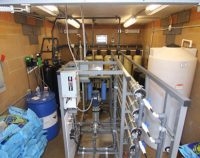
$18.00 Add to cartThis course focuses on criteria for water source development, design of small water supply, treatment, and distribution systems. This professional engineer online course is from the U.S. Army Corps of Engineers manual on the Design of Small Water Systems. This manual provides information of interest to planners and designers of small water systems. The major emphasis of this course is on the design of systems that will be effective and reliable, requiring a level of operation and management activity commensurate with their physical size and the available sources.Instructor: Raymond Bosek, PEThis course focuses on criteria for water source development, design of small water supply, treatment, and distribution systems. This professional engineer online course is from the U.S. Army Corps of Engineers manual on the Design of Small Water Systems. This manual provides information of interest to planners and designers of small water systems. The major emphasis of this course is on the design of systems that will be effective and reliable, requiring a level of operation and management activity commensurate with their physical size and the available sources.
SPECIFIC KNOWLEDGE OR SKILL OBTAINED
This course teaches the following specific knowledge and skills:
- Preliminary Water System Planning and Design Considerations
- Water Quality Requirements (State, EPA, local)
- Water Quantity Requirements
- Water Source Options and Source Development
- Water Treatment Unit Operations such as Disinfection, Iron Removal
- Manganese Removal, Hardness Removal, Taste and Odor Removal
- Stability and Corrosion Control, Turbidity Removal, Color Removal, and many other technologies and their applications
CERTIFICATE OF COMPLETION
You will be able to immediately print a certificate of completion after passing a 20 question multiple-choice quiz. The quiz can be retaken unlimited times until a passing grade of 70% or better is earned. This course satisfies 3 professional development hours (PDH) of continuing education.
Preview CourseClick “Preview Course” to View Prior to PurchaseClick “Add to Cart” to Purchase and Access Quiz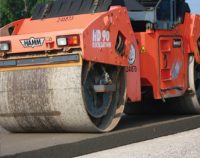
Roller Compacted Concrete Pavements: 1 PDH (On-Demand Webinar)
$10.00 Add to cartThis introductory course provides the engineer the basic understanding of the fundamentals of RCCP in design and construction. It presents an overview of the best practices for roller-compacted concrete pavement, its uses, its mixtures and construction.Instructor: Raymond Bosek, PEThis introductory course provides the engineer the basic understanding of the fundamentals of RCCP in design and construction. It presents an overview of the best practices for roller-compacted concrete pavement, its uses, its mixtures and construction.SPECIFIC KNOWLEDGE OR SKILL OBTAINED
This course teaches the following specific knowledge and skills:
- Understand materials used for RCC pavements
- Explain Construction and Design of RCCP
- Describe Paving Operations of RCCP
- Discuss Jointing and Texturing of RCCP
CERTIFICATE OF COMPLETION
You will be able to immediately print a certificate of completion after passing a five (5) question multiple-choice quiz. The quiz can be retaken unlimited times until a passing grade of 70% or better is earned. Records also are available anytime online by accessing your account on EZ-pdh.com. This course satisfies 1 professional development hours (PDH) of continuing education.
Our On-demand Webinars are recorded from live webinars conducted utilizing GotoWebinar.com service (chosen for reliability, ease of use, no software required and ability to attend using your computer, tablet, or smart phone).Upon purchase your will have access to launch the On-demand Webinar.
The On-demand Webinar will play through similar to a live webinar, however you will have the ability to take anytime, pause/rewind and complete in more than one session.
Upon completion you will then answer a short five question quiz, which can be taken unlimited times until passing, immediately generating a certificate of completion.
You may print or save your certificate or access anytime within your account.
