


Building Envelope Impact on HVAC Energy Use: 3 PDH
$18.00
How airtight are the buildings you are responsible for? What is the energy load and indoor air quality like in your buildings? The only way to know is to perform a study. Despite common assumptions, measurements have shown that typical U.S. commercial buildings are not particularly airtight.
In this course we present a recent simulation study on the impact of improving envelope airtightness in U.S. commercial buildings. You get documented, verifiable facts, report charts and graphs illustrating the findings, and a discussion from the report on the results of the study, Investigation of the Impact of Commercial Building Envelope Airtightness on HVAC Energy Use.
SPECIFIC KNOWLEDGE OR SKILL OBTAINED
This course teaches the following specific knowledge and skills:
- Discuss the reasons for performing a study
- Understand the method of analysis regarding building envelope tightness
- Describe the buildings used for the study
- Understand which climates allow for the most HVAC savings
- Explain the results of the study
CERTIFICATE OF COMPLETION
You will be able to immediately print a certificate of completion after passing a 10 question multiple-choice quiz. The quiz can be retaken unlimited times until a passing grade of 70% or better is earned. This course satisfies 3 professional development hours (PDH) of continuing education.
Related Courses
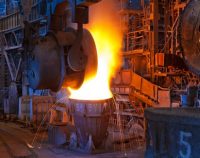
Fundamentals of Metals: 5 PDH
$30.00 Add to cartThe course provides an understanding of the structure and properties of metals, stress mechanisms, failure modes and the characteristics determine their usefulness for a specific application. Often, materials are subject to variable forces (loads). The engineer calculates these forces to establish the service that can be expected and material scientists experiment to determine how materials deform (elongate, compress, and twist) or break as a function of applied load, time, temperature, and other conditions.Instructor: Seth Grablow, PEThe course provides an understanding of the structure and properties of metals, stress mechanisms, failure modes and the characteristics determine their usefulness for a specific application. Often, materials are subject to variable forces (loads). The engineer calculates these forces to establish the service that can be expected and material scientists experiment to determine how materials deform (elongate, compress, and twist) or break as a function of applied load, time, temperature, and other conditions.
SPECIFIC KNOWLEDGE OR SKILL OBTAINED
This course teaches the following specific knowledge and skills:
- Mechanical properties of metals
- Structure of metals and how those structures are affected by various processes
CERTIFICATE OF COMPLETION
You will be able to immediately print a certificate of completion after passing a 20 question multiple-choice quiz. The quiz can be retaken unlimited times until a passing grade of 70% or better is earned. This course satisfies 5 professional development hours (PDH) of continuing education.
Preview CourseClick “Preview Course” to View Prior to PurchaseClick “Add to Cart” to Purchase and Access Quiz
Systems Engineering Fundamentals Part 2: 5 PDH
$30.00 Add to cartPart two of a two-part course, this course provides a thorough overview of the systems engineering process and presents a in-depth review of the tools and processes to to develop a system efficiently and effectively and to support that system through its life cycle. Instructor: Seth Grablow, PESPECIFIC KNOWLEDGE OR SKILL OBTAINED
This course teaches the following specific knowledge and skills:
- Understand technical reviews and their roles in systems development
- Discuss applications of trade studies, modeling & simulation, and metrics
- Explain risk management and standards tools and concepts
- Discuss systems engineering planning
- Discuss product improvement strategies
- Explain organizing and integrating systems development
- Understand contractual and management considerations
CERTIFICATE OF COMPLETION
You will be able to immediately print a certificate of completion after passing a twenty (20) question multiple-choice quiz. The quiz can be retaken unlimited times until a passing grade of 70% or better is earned. This course satisfies five (5) professional development hours (PDH) of continuing education.
Preview CourseClick “Preview Course” to View Prior to PurchaseClick “Add to Cart” to Purchase and Access Quiz
