


Fundamentals of Gas Turbine Engines: 5 PDH
$30.00
Concepts for machines that harness power from heated air or water have been around since the 1600s. From this beginning, the gas turbine engine now is at the center of major industries including: aviation, naval propulsion, and power generation. This course provides an overview of the development of gas turbines, operational theory, Brayton cycle, conditions and design limitations that affect performance, types of turbine engines and components utilized in a gas turbine engine.
SPECIFIC KNOWLEDGE OR SKILL OBTAINED
This course teaches the following specific knowledge and skills:
- History of development of the gas turbine
- Basic gas turbine engine operation theory, Brayton Cycle
- Factor affecting engine performance
- Types of gas turbine engines
- Components of a gas turbine engine
- Gas turbine engine auxiliary systems
CERTIFICATE OF COMPLETION
You will be able to immediately print a certificate of completion after passing a 25 question multiple-choice quiz. The quiz can be retaken unlimited times until a passing grade of 70% or better is earned. This course satisfies 5 professional development hours (PDH) of continuing education.
Related Courses

Vacuum Technology and Applications: 5 PDH
$30.00 Add to cartIn this course the student will gain a comprehensive understanding of vacuum technology, including its principles, terminology, pump technologies, measurement methods, system design, leak detection, and application across industries. They will learn how vacuum environments are created, maintained, and optimized for various engineering and industrial processes.Instructor: Seth Grablow, PESPECIFIC KNOWLEDGE OR SKILL OBTAINED
This course teaches the following specific knowledge and skills:
- Understand vacuum science principles and key terminology.
- Classify vacuum pump technologies by pressure range and application.
- Explain vacuum measurement methods and selection criteria.
- Analyze vacuum system design and sizing considerations.
- Apply safety protocols for hazardous vacuum applications.
- Evaluate vacuum applications across chemical, pharmaceutical, and industrial sectors.
CERTIFICATE OF COMPLETION
You will be able to immediately print a certificate of completion after passing a 20 question multiple-choice quiz. The quiz can be retaken unlimited times until a passing grade of 70% or better is earned. This course satisfies five (5) hours of professional development (PDH).
Preview CourseClick “Preview Course” to view prior to purchaseClick “Add to Cart” to purchase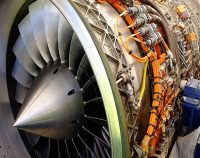
Thermodynamics: 8 PDH
$48.00 Add to cartThis course provides a detailed overview of Thermodynamics Principles and Practices including thermodynamic principles in practical industrial, commercial and residential applications. The student will comprehend, analyze and solve various types of practical thermodynamic problems through several case studies. Laws, equations, graphs, charts, tables and diagrams, pertaining to various thermodynamics concepts, are covered and utilized in the analysis and solution of the case study problems.Instructor: Seth Grablow, PEThis course provides a detailed overview of Thermodynamics Principles and Practices including thermodynamic principles in practical industrial, commercial and residential applications. The student will comprehend, analyze and solve various types of practical thermodynamic problems through several case studies. Laws, equations, graphs, charts, tables and diagrams, pertaining to various thermodynamics concepts, are covered and utilized in the analysis and solution of the case study problems.
SPECIFIC KNOWLEDGE OR SKILL OBTAINED
This course teaches the following specific knowledge and skills:
- Energy concepts and extension/application of the law of conservation of energy
- Conversion of thermal energy to electricity through steam turbines and electric generators
- Understanding and application of Steam Tables
- Fundamental and essential concepts such as entropy, enthalpy, heat of fusion, heat of sublimation, latent and sensible heat
- Thermodynamic processes
- Heat engine cycles
- Pyschrometric analysis based on psychrometric chart
- Refrigeration cycle related numerical analysis utilizing Pressure –Enthalpy Charts
CERTIFICATE OF COMPLETION
You will be able to immediately print a certificate of completion after passing a 30 question multiple-choice quiz. The quiz can be retaken unlimited times until a passing grade of 70% or better is earned. This course satisfies 8 professional development hours (PDH) of continuing education.
Preview CourseClick “Preview Course” to View Prior to PurchaseClick “Add to Cart” to Purchase and Access Quiz
