

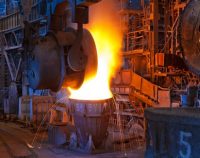
Fundamentals of Metals: 5 PDH
$30.00
The course provides an understanding of the structure and properties of metals, stress mechanisms, failure modes and the characteristics determine their usefulness for a specific application. Often, materials are subject to variable forces (loads). The engineer calculates these forces to establish the service that can be expected and material scientists experiment to determine how materials deform (elongate, compress, and twist) or break as a function of applied load, time, temperature, and other conditions.
SPECIFIC KNOWLEDGE OR SKILL OBTAINED
This course teaches the following specific knowledge and skills:
- Mechanical properties of metals
- Structure of metals and how those structures are affected by various processes
CERTIFICATE OF COMPLETION
You will be able to immediately print a certificate of completion after passing a 20 question multiple-choice quiz. The quiz can be retaken unlimited times until a passing grade of 70% or better is earned. This course satisfies 5 professional development hours (PDH) of continuing education.
Related Courses
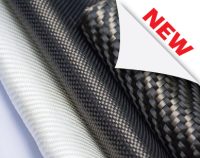
Introduction to Composite Materials: 3 PDH
$18.00 Add to cartIn this course the student will understand the fundamental concepts, structures, classifications, and applications of composite materials. They will learn how different fibre and matrix combinations influence properties, and they will grasp the benefits and limitations of thermoset and thermoplastic composites as well as reinforcement mechanisms.Instructor: Seth Grablow, PESPECIFIC KNOWLEDGE OR SKILL OBTAINED
This course teaches the following specific knowledge and skills:
- Define composite materials and their constituent components.
- Compare thermoset and thermoplastic matrices.
- Classify common fibre reinforcements and their uses.
- Describe composite processing and manufacturing techniques.
- Analyze mechanical properties of composites.
- Identify applications across multiple engineering sectors.
CERTIFICATE OF COMPLETION
You will be able to immediately print a certificate of completion after passing a 15 question multiple-choice quiz. The quiz can be retaken unlimited times until a passing grade of 70% or better is earned. This course satisfies three (3) hours of professional development (PDH).
Preview CourseClick “Preview Course” to view prior to purchaseClick “Add to Cart” to purchase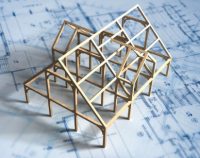
Residential Structural Design: 5 PDH
$30.00 Add to cartIn this course the student will understand the basics of residential construction and design, residential structural design concepts and design loads for residential buildings and to gain an understanding of modern design methods and concepts for light-frame homes, apartments, and townhouses.Instructor: Raymond Bosek, PESPECIFIC KNOWLEDGE OR SKILL OBTAINED
This course teaches the following specific knowledge and skills:
- Explain American housing relative to its history, construction characteristics, regulation, and performance experience
- Discuss structural sesign as it applies to residential buildings
- Discuss the latest technical knowledge and engineering approaches for the design of homes
- Explain design loads for residential buildings
- Explain the various loads and load combinations
- Review the various design approaches and corresponding calculations
CERTIFICATE OF COMPLETION
You will be able to immediately print a certificate of completion after passing a 20 question multiple-choice quiz. The quiz can be retaken unlimited times until a passing grade of 70% or better is earned. This course satisfies five (5) hours of professional development (PDH).
Preview CourseClick “Preview Course” to view prior to purchaseClick “Add to Cart” to purchase
