

Heat Transfer: 4 PDH
$24.00
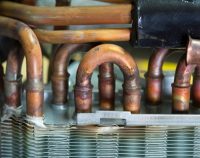
The transfer of heat is an integral part of many industrial processes. Moreover, heat transfer affects our everyday lives – from an oven heating our dinner to the wind cooling us on a hot summer day. Thus, it is important that the engineer understands how to apply the basic principles of heat transfer to solve real-world problems.
SPECIFIC KNOWLEDGE OR SKILL OBTAINED
This course teaches the following specific knowledge and skills:
- Heat transfer definitions and terminology, including heat flux, thermal conductivity, LMTD, and heat transfer coefficients
- Conduction and the equivalent resistance formulas
- Convection and use of the overall heat transfer coefficient
- Radiant heat transfer, including black bodies, gray bodies and emissivity
CERTIFICATE OF COMPLETION
You will be able to immediately print a certificate of completion after passing a 15 question multiple-choice quiz. The quiz can be retaken unlimited times until a passing grade of 70% or better is earned. This course satisfies 4 professional development hours (PDH) of continuing education.
Related Courses

Thermodynamics: 8 PDH
$48.00 Add to cartThis course provides a detailed overview of Thermodynamics Principles and Practices including thermodynamic principles in practical industrial, commercial and residential applications. The student will comprehend, analyze and solve various types of practical thermodynamic problems through several case studies. Laws, equations, graphs, charts, tables and diagrams, pertaining to various thermodynamics concepts, are covered and utilized in the analysis and solution of the case study problems.Instructor: Seth Grablow, PEThis course provides a detailed overview of Thermodynamics Principles and Practices including thermodynamic principles in practical industrial, commercial and residential applications. The student will comprehend, analyze and solve various types of practical thermodynamic problems through several case studies. Laws, equations, graphs, charts, tables and diagrams, pertaining to various thermodynamics concepts, are covered and utilized in the analysis and solution of the case study problems.
SPECIFIC KNOWLEDGE OR SKILL OBTAINED
This course teaches the following specific knowledge and skills:
- Energy concepts and extension/application of the law of conservation of energy
- Conversion of thermal energy to electricity through steam turbines and electric generators
- Understanding and application of Steam Tables
- Fundamental and essential concepts such as entropy, enthalpy, heat of fusion, heat of sublimation, latent and sensible heat
- Thermodynamic processes
- Heat engine cycles
- Pyschrometric analysis based on psychrometric chart
- Refrigeration cycle related numerical analysis utilizing Pressure –Enthalpy Charts
CERTIFICATE OF COMPLETION
You will be able to immediately print a certificate of completion after passing a 30 question multiple-choice quiz. The quiz can be retaken unlimited times until a passing grade of 70% or better is earned. This course satisfies 8 professional development hours (PDH) of continuing education.
Preview CourseClick “Preview Course” to View Prior to PurchaseClick “Add to Cart” to Purchase and Access Quiz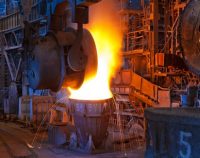
Fundamentals of Metals: 5 PDH
$30.00 Add to cartThe course provides an understanding of the structure and properties of metals, stress mechanisms, failure modes and the characteristics determine their usefulness for a specific application. Often, materials are subject to variable forces (loads). The engineer calculates these forces to establish the service that can be expected and material scientists experiment to determine how materials deform (elongate, compress, and twist) or break as a function of applied load, time, temperature, and other conditions.Instructor: Seth Grablow, PEThe course provides an understanding of the structure and properties of metals, stress mechanisms, failure modes and the characteristics determine their usefulness for a specific application. Often, materials are subject to variable forces (loads). The engineer calculates these forces to establish the service that can be expected and material scientists experiment to determine how materials deform (elongate, compress, and twist) or break as a function of applied load, time, temperature, and other conditions.
SPECIFIC KNOWLEDGE OR SKILL OBTAINED
This course teaches the following specific knowledge and skills:
- Mechanical properties of metals
- Structure of metals and how those structures are affected by various processes
CERTIFICATE OF COMPLETION
You will be able to immediately print a certificate of completion after passing a 20 question multiple-choice quiz. The quiz can be retaken unlimited times until a passing grade of 70% or better is earned. This course satisfies 5 professional development hours (PDH) of continuing education.
Preview CourseClick “Preview Course” to View Prior to PurchaseClick “Add to Cart” to Purchase and Access Quiz
