

Illinois-Electrical Engineering Package #3: 30 PDH
Original price was: $180.00.$90.00Current price is: $90.00.
Illinois – Laws, Rules and Ethics for Professional Engineers: 3 PDH
In this course the student will study the State Board of Professional Engineers of the Illinois Department of Financial and Professional Regulation Laws and Rules, including Professional Engineering Ethics.
AI/ML Technology in Power System Applications: 5 PDH
In this course the student will understand the role, potential, and challenges of Artificial Intelligence (AI) and Machine Learning (ML) technologies in modern power system applications. They will gain knowledge of various AI/ML techniques, their practical uses in grid operations, and the importance of safety, security, and trust in deploying these technologies within critical infrastructure
Best Practices for Energy-Efficient Data Center Design: 4 PDH
In this course the student will understand the principles, strategies, and technologies used to design energy-efficient data centers, including IT systems, environmental controls, cooling systems, air management, and energy performance metrics.
Continuous Energy Improvement in Motor Driven Systems: 5 PDH
In this course the student will understand the principles, strategies, and best practices for achieving continuous energy improvement in motor-driven systems. They will learn how to develop and implement motor management programs, assess motor system efficiency, apply energy-saving technologies, and adopt life-cycle cost approaches to decision-making.
Grid-Scale Energy Storage Technologies: 4 PDH
In this course the student will gain a comprehensive understanding of current and emerging grid-scale energy storage technologies, their operational characteristics, applications, and the role these technologies play in enhancing power system flexibility and supporting renewable energy integration.
Lightning Protection Design and Standards: 5 PDH
In this course the student will understand the principles, standards, risks, and design methods of lightning protection systems, including external and internal protection strategies, materials selection, and risk assessment based on IEC 62305 standards.
Renewable Energy – Ocean Energy Technology: 3 PDH
In this course the student will gain a comprehensive understanding of the principles, technologies, and challenges involved in harvesting ocean energy—wave, tidal, marine current, and ocean thermal energy—and their potential for integration into national renewable energy strategies.
Sexual Harassment Prevention Training: 1 PDH
Preview Course: Illinois Laws, Rules and Ethics
Preview Course: AI/ML Technology in Power System Applications
Best Practices for Energy-Efficient Data Center Design
Preview Course: Continuous Energy Improvement in Motor Driven Systems
Preview Course: Grid-Scale Energy Storage Technologies
Preview Course: Lightning Protection Design and Standards
Preview Course: Renewable Energy – Ocean Energy Technology
Preview Course: Sexual Harassment Prevention Training
Related Courses
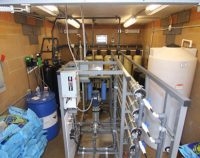
Design of Small Water Systems: 3 PDH
$18.00 Add to cartThis course focuses on criteria for water source development, design of small water supply, treatment, and distribution systems. This professional engineer online course is from the U.S. Army Corps of Engineers manual on the Design of Small Water Systems. This manual provides information of interest to planners and designers of small water systems. The major emphasis of this course is on the design of systems that will be effective and reliable, requiring a level of operation and management activity commensurate with their physical size and the available sources.Instructor: Raymond Bosek, PEThis course focuses on criteria for water source development, design of small water supply, treatment, and distribution systems. This professional engineer online course is from the U.S. Army Corps of Engineers manual on the Design of Small Water Systems. This manual provides information of interest to planners and designers of small water systems. The major emphasis of this course is on the design of systems that will be effective and reliable, requiring a level of operation and management activity commensurate with their physical size and the available sources.
SPECIFIC KNOWLEDGE OR SKILL OBTAINED
This course teaches the following specific knowledge and skills:
- Preliminary Water System Planning and Design Considerations
- Water Quality Requirements (State, EPA, local)
- Water Quantity Requirements
- Water Source Options and Source Development
- Water Treatment Unit Operations such as Disinfection, Iron Removal
- Manganese Removal, Hardness Removal, Taste and Odor Removal
- Stability and Corrosion Control, Turbidity Removal, Color Removal, and many other technologies and their applications
CERTIFICATE OF COMPLETION
You will be able to immediately print a certificate of completion after passing a 20 question multiple-choice quiz. The quiz can be retaken unlimited times until a passing grade of 70% or better is earned. This course satisfies 3 professional development hours (PDH) of continuing education.
Preview CourseClick “Preview Course” to View Prior to PurchaseClick “Add to Cart” to Purchase and Access Quiz- Sale!

Louisiana-Civil Engineering Package: 30 PDH
Original price was: $180.00.$90.00Current price is: $90.00. Add to cartLouisiana CPD Approved Provider CPD.0000317This course satisfies the new LA rules effective Jan 1, 2017, includes four required hours of Life Safety Code, building codes and/or Americans with Disabilities Act Accessibility Guidelines and the one required hour of professional ethics, ref. §3105Five Civil Engineering courses plus Louisiana Laws, Rules, & Ethics and Life Safety Code that will earn 30 PDH accepted by the Louisiana Professional Engineering and Land Surveying Board Instructor: Raymond Bosek, PELouisiana – Laws, Rules, and Ethics for Professional Engineers: 3 PDH
Satisfies 1 hr Ethics
In this course the student will study the Louisiana Board of Professional Engineering and Land Surveying Board (lapels) Laws & Rules including Professional Engineering Ethics.Accident and Operational Safety Analysis: 4 PDH
Satisfies 4 hrs Life Safety Code
In this course the student will understand the fundamental concepts of accident dynamics, accident prevention, and accident analysis. The student will learn the theoretical bases of safety management and accident analysis, and the practical application of a Safety Management framework for an organization.Bridge Steels and their Mechanical Properties: 4 PDH
In this course the student will gain a comprehensive understanding of the types, properties, manufacturing processes, and performance characteristics of structural steels used in bridge construction. They will understand how various steel grades are selected based on mechanical properties, environmental conditions, and fabrication needs.
Continuously Reinforced Concrete Pavement: 5 PDH
In this course the student will understand the design, construction, maintenance, and rehabilitation of Continuously Reinforced Concrete Pavement (CRCP). They will grasp the critical principles governing CRCP performance, including crack control, reinforcement detailing, and the role of materials and environmental conditions in long-term pavement behavior.
Corrosion Protection of Steel Bridges: 5 PDH
In this course the student will understand the principles, materials, environmental factors, and design strategies necessary to mitigate corrosion in steel bridge structures. They will develop a comprehensive knowledge of corrosion mechanisms, protection systems, and performance evaluation.
Curing of Portland Cement Concrete Pavements: 4 PDH
In this course the student will gain detailed, research-based guidance on the curing process for concrete pavements, including pre-construction planning, methods of curing (initial and final), material selection, environmental considerations, and techniques to verify curing effectiveness. It emphasizes best practices to ensure long-term pavement performance and reduce early-life concrete distress.
Roller-Compacted Concrete : 5 PDH
In this course the student will understand the principles, methods, and considerations involved in the use of roller-compacted concrete (RCC) for civil works structures, particularly dams. They will gain foundational knowledge of material properties, mix design, construction techniques, and quality assurance protocols essential to RCC implementation.
XXXXXXXXXXXXXXXXXXX
Preview Course: Louisiana Laws, Rules and Ethics
Preview Course: Accident and Operational Safety Analysis
Preview Course: Bridge Steels
Preview Course: Continuously Reinforced Concrete Pavement
Preview Course: Corrosion Protection of Steel Bridges
Preview Course: Curing of PCC Pavements
Preview Course: Roller-Compacted Concrete
