
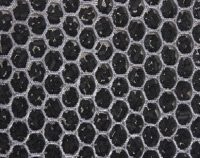
Carbon Absorption of Volatile Organic Compounds: 3 PDH
$18.00 Add to cartCarbon adsorption is used in air pollution control to remove volatile organic compounds (VOCs) from low to medium concentration gas streams, when stringent outlet concentration must be met and/or recovery of the VOC is desired. This course covers the types of adsorbers, adsorption theory, and design procedures for carbon adsorption equipment.Instructor: Seth Grablow, PECarbon adsorption is used in air pollution control to remove volatile organic compounds (VOCs) from low to medium concentration gas streams, when stringent outlet concentration must be met and/or recovery of the VOC is desired. This course covers the types of adsorbers, adsorption theory, and design procedures for carbon adsorption equipment.
SPECIFIC KNOWLEDGE OR SKILL OBTAINED
This course teaches the following specific knowledge and skills:
- The types of carbon adsorption equipment and which are in most common use
- Define an adsorption isotherm and be able to recognize the equation for the Freundlich isotherm
- Adsorber sizing parameters
- Make adsorption and desorption time calculations
- Procedures for estimating carbon requirements
- Cost estimation procedures for carbon adsorption systems
CERTIFICATE OF COMPLETION
You will be able to immediately print a certificate of completion after passing a 20 question multiple-choice quiz. The quiz can be retaken unlimited times until a passing grade of 70% or better is earned. This course satisfies 3 professional development hours (PDH) of continuing education.
Preview CourseClick “Preview Course” to View Prior to PurchaseClick “Add to Cart” to Purchase and Access QuizCarbon Absorption of Volatile Organic Compounds: 3 PDH
$18.00 Add to cartCarbon adsorption is used in air pollution control to remove volatile organic compounds (VOCs) from low to medium concentration gas streams, when stringent outlet concentration must be met and/or recovery of the VOC is desired. This course covers the types of adsorbers, adsorption theory, and design procedures for carbon adsorption equipment.Instructor: Seth Grablow, PECarbon adsorption is used in air pollution control to remove volatile organic compounds (VOCs) from low to medium concentration gas streams, when stringent outlet concentration must be met and/or recovery of the VOC is desired. This course covers the types of adsorbers, adsorption theory, and design procedures for carbon adsorption equipment.
SPECIFIC KNOWLEDGE OR SKILL OBTAINED
This course teaches the following specific knowledge and skills:
- The types of carbon adsorption equipment and which are in most common use
- Define an adsorption isotherm and be able to recognize the equation for the Freundlich isotherm
- Adsorber sizing parameters
- Make adsorption and desorption time calculations
- Procedures for estimating carbon requirements
- Cost estimation procedures for carbon adsorption systems
CERTIFICATE OF COMPLETION
You will be able to immediately print a certificate of completion after passing a 20 question multiple-choice quiz. The quiz can be retaken unlimited times until a passing grade of 70% or better is earned. This course satisfies 3 professional development hours (PDH) of continuing education.
Preview CourseClick “Preview Course” to View Prior to PurchaseClick “Add to Cart” to Purchase and Access Quiz
Chemical Deicers & Concrete Pavement: Impacts & Mitigation: 1 PDH
$6.00 Add to cartIn this course the student will understand the distresses caused to concrete by chemical deicers and methods used to minimize this distress.Instructor: Raymond Bosek, PEIn this course the student will understand the distresses caused to concrete by chemical deicers and methods used to minimize this distress.
SPECIFIC KNOWLEDGE OR SKILL OBTAINED
This course teaches the following specific knowledge and skills:
- Understanding of the use of chemical anti-icers and deicers
- Discuss how hydraulic cement paste (HCP) is traditionally protected from freeze-thaw damage
- Describe physical and chemical distress mechanisms
- Discuss strategies that can be employed to mitigate this distress
CERTIFICATE OF COMPLETION
You will be able to immediately print a certificate of completion after passing a 10 question multiple-choice quiz. The quiz can be retaken unlimited times until a passing grade of 70% or better is earned. This course satisfies one professional development hour (PDH) of continuing education.
Preview CourseClick “Preview Course” to View Prior to PurchaseClick “Add to Cart” to Purchase and Access QuizChemical Deicers & Concrete Pavement: Impacts & Mitigation: 1 PDH
$6.00 Add to cartIn this course the student will understand the distresses caused to concrete by chemical deicers and methods used to minimize this distress.Instructor: Raymond Bosek, PEIn this course the student will understand the distresses caused to concrete by chemical deicers and methods used to minimize this distress.
SPECIFIC KNOWLEDGE OR SKILL OBTAINED
This course teaches the following specific knowledge and skills:
- Understanding of the use of chemical anti-icers and deicers
- Discuss how hydraulic cement paste (HCP) is traditionally protected from freeze-thaw damage
- Describe physical and chemical distress mechanisms
- Discuss strategies that can be employed to mitigate this distress
CERTIFICATE OF COMPLETION
You will be able to immediately print a certificate of completion after passing a 10 question multiple-choice quiz. The quiz can be retaken unlimited times until a passing grade of 70% or better is earned. This course satisfies one professional development hour (PDH) of continuing education.
Preview CourseClick “Preview Course” to View Prior to PurchaseClick “Add to Cart” to Purchase and Access Quiz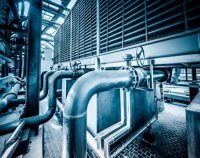
Chillers, Refrigerant Compressors, and Heating Systems: 5 PDH
$30.00 Add to cartThis course focuses on the equipment and equipment components used to generate heating and cooling. It does not include fans and pumps. This distinction is clear for most equipment types, such as unit heaters, boilers, and chillers. However, for packaged air-conditioning (AC) equipment the distinction can be subtle. Most packaged AC equipment is treated as a unit by performance rating procedures. Hence, separation of the fans is difficult. For this study, only the refrigerant compressors of packaged equipment are considered. Instructor: Seth Grablow, PEThis course focuses on the equipment and equipment components used to generate heating and cooling. It does not include fans and pumps. This distinction is clear for most equipment types, such as unit heaters, boilers, and chillers. However, for packaged air-conditioning (AC) equipment the distinction can be subtle. Most packaged AC equipment is treated as a unit by performance rating procedures. Hence, separation of the fans is difficult. For this study, only the refrigerant compressors of packaged equipment are considered.
SPECIFIC KNOWLEDGE OR SKILL OBTAINED
This course teaches the following specific knowledge and skills:
- To provide an accurate estimate of the energy used by primary cooling and heating equipment in the US commercial building sector
- To provide a physical understanding of the factors, which contribute to energy use by the equipment
- To provide a baseline estimate of current national energy use, which can be used for calculation of the national energy savings impact of various options for reducing energy usage
CERTIFICATE OF COMPLETION
You will be able to immediately print a certificate of completion after passing a 20 question multiple-choice quiz. The quiz can be retaken unlimited times until a passing grade of 70% or better is earned. This course satisfies 5 professional development hours (PDH) of continuing education.
Preview CourseClick “Preview Course” to View Prior to PurchaseClick “Add to Cart” to Purchase and Access QuizChillers, Refrigerant Compressors, and Heating Systems: 5 PDH
$30.00 Add to cartThis course focuses on the equipment and equipment components used to generate heating and cooling. It does not include fans and pumps. This distinction is clear for most equipment types, such as unit heaters, boilers, and chillers. However, for packaged air-conditioning (AC) equipment the distinction can be subtle. Most packaged AC equipment is treated as a unit by performance rating procedures. Hence, separation of the fans is difficult. For this study, only the refrigerant compressors of packaged equipment are considered. Instructor: Seth Grablow, PEThis course focuses on the equipment and equipment components used to generate heating and cooling. It does not include fans and pumps. This distinction is clear for most equipment types, such as unit heaters, boilers, and chillers. However, for packaged air-conditioning (AC) equipment the distinction can be subtle. Most packaged AC equipment is treated as a unit by performance rating procedures. Hence, separation of the fans is difficult. For this study, only the refrigerant compressors of packaged equipment are considered.
SPECIFIC KNOWLEDGE OR SKILL OBTAINED
This course teaches the following specific knowledge and skills:
- To provide an accurate estimate of the energy used by primary cooling and heating equipment in the US commercial building sector
- To provide a physical understanding of the factors, which contribute to energy use by the equipment
- To provide a baseline estimate of current national energy use, which can be used for calculation of the national energy savings impact of various options for reducing energy usage
CERTIFICATE OF COMPLETION
You will be able to immediately print a certificate of completion after passing a 20 question multiple-choice quiz. The quiz can be retaken unlimited times until a passing grade of 70% or better is earned. This course satisfies 5 professional development hours (PDH) of continuing education.
Preview CourseClick “Preview Course” to View Prior to PurchaseClick “Add to Cart” to Purchase and Access Quiz
Circuit Protection Devices: 1 PDH
$6.00 Add to cartIn this course the student will learn the basics of circuit protection and the common devices and the attributes of these devices used for protecting circuit integrity. Instructor: Juan Pesante, PESPECIFIC KNOWLEDGE OR SKILL OBTAINED
This course teaches the following specific knowledge and skills:
- Discuss the reasons for protection (shorts, excessive current, heat)
- Explain the functions of fuses and circuit breakers
- Understand the different fuse types
- Understand the different fuse ratings
- Identify fuse designations
- Explain how to check and replace fuses safely
- Identify the different types of circuit breakers
- Understand circuit breaker ratings
- Discuss circuit breaker maintenance
CERTIFICATE OF COMPLETION
You will be able to immediately print a certificate of completion after passing a 10 question multiple-choice quiz. The quiz can be retaken unlimited times until a passing grade of 70% or better is earned. This course satisfies one professional development hour (PDH) of continuing education.
Preview CourseClick “Preview Course” to View Prior to PurchaseClick “Add to Cart” to Purchase and Access QuizCircuit Protection Devices: 1 PDH
$6.00 Add to cartIn this course the student will learn the basics of circuit protection and the common devices and the attributes of these devices used for protecting circuit integrity. Instructor: Juan Pesante, PESPECIFIC KNOWLEDGE OR SKILL OBTAINED
This course teaches the following specific knowledge and skills:
- Discuss the reasons for protection (shorts, excessive current, heat)
- Explain the functions of fuses and circuit breakers
- Understand the different fuse types
- Understand the different fuse ratings
- Identify fuse designations
- Explain how to check and replace fuses safely
- Identify the different types of circuit breakers
- Understand circuit breaker ratings
- Discuss circuit breaker maintenance
CERTIFICATE OF COMPLETION
You will be able to immediately print a certificate of completion after passing a 10 question multiple-choice quiz. The quiz can be retaken unlimited times until a passing grade of 70% or better is earned. This course satisfies one professional development hour (PDH) of continuing education.
Preview CourseClick “Preview Course” to View Prior to PurchaseClick “Add to Cart” to Purchase and Access Quiz
Coating Types and Characteristics of Metals: 3 PDH
$18.00 Add to cartIn this course the student will understand the characteristics and applications of various industrial coatings and metal finishes. Instructor: Seth Grablow, PESPECIFIC KNOWLEDGE OR SKILL OBTAINED
This course teaches the following specific knowledge and skills:
- Discuss various metal coating types and characteristics
- Explain film-forming mechanisms and binders
- Understand driers, pigments, solvents, and miscellaneous additives
- Explain zinc-rich coatings and VOCs
- Understand powder coating, thermal sprays, galvanizing, etc.
CERTIFICATE OF COMPLETION
You will be able to immediately print a certificate of completion after passing a fifteen (15) question multiple-choice quiz. The quiz can be retaken unlimited times until a passing grade of 70% or better is earned. This course satisfies three (3) professional development hours (PDH) of continuing education.
Preview CourseClick “Preview Course” to View Prior to PurchaseClick “Add to Cart” to Purchase and Access QuizCoating Types and Characteristics of Metals: 3 PDH
$18.00 Add to cartIn this course the student will understand the characteristics and applications of various industrial coatings and metal finishes. Instructor: Seth Grablow, PESPECIFIC KNOWLEDGE OR SKILL OBTAINED
This course teaches the following specific knowledge and skills:
- Discuss various metal coating types and characteristics
- Explain film-forming mechanisms and binders
- Understand driers, pigments, solvents, and miscellaneous additives
- Explain zinc-rich coatings and VOCs
- Understand powder coating, thermal sprays, galvanizing, etc.
CERTIFICATE OF COMPLETION
You will be able to immediately print a certificate of completion after passing a fifteen (15) question multiple-choice quiz. The quiz can be retaken unlimited times until a passing grade of 70% or better is earned. This course satisfies three (3) professional development hours (PDH) of continuing education.
Preview CourseClick “Preview Course” to View Prior to PurchaseClick “Add to Cart” to Purchase and Access Quiz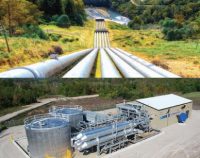
Compressed Air Energy Storage and Pumped Storage Hydropower Concepts: 4 PDH
$24.00 Add to cartIn this course the student will understand understand current Compressed Air Energy Storage (CAES) and Pumped Storage Hydropower (PSH) technologies and explore future advances of this technology by examining the feasibility of a variety of different concepts. Instructor: Juan Pesante, PESPECIFIC KNOWLEDGE OR SKILL OBTAINED
This course teaches the following specific knowledge and skills:
- Understand current CAES and PSH technologies and their challenges
- Discuss bulk energy storage applications and their requirements
- Discuss novel CAES technologies
- Discuss novel PSH technologies
- Explain the feasibility of these novel technologies
- Discuss technological gaps and barriers and further R&D needs
CERTIFICATE OF COMPLETION
You will be able to immediately print a certificate of completion after passing a 20 question multiple-choice quiz. The quiz can be retaken unlimited times until a passing grade of 70% or better is earned. This course satisfies four (4) hours of professional development (PDH).
Preview CourseClick “Preview Course” to view prior to purchaseClick “Add to Cart” to purchaseCompressed Air Energy Storage and Pumped Storage Hydropower Concepts: 4 PDH
$24.00 Add to cartIn this course the student will understand understand current Compressed Air Energy Storage (CAES) and Pumped Storage Hydropower (PSH) technologies and explore future advances of this technology by examining the feasibility of a variety of different concepts. Instructor: Juan Pesante, PESPECIFIC KNOWLEDGE OR SKILL OBTAINED
This course teaches the following specific knowledge and skills:
- Understand current CAES and PSH technologies and their challenges
- Discuss bulk energy storage applications and their requirements
- Discuss novel CAES technologies
- Discuss novel PSH technologies
- Explain the feasibility of these novel technologies
- Discuss technological gaps and barriers and further R&D needs
CERTIFICATE OF COMPLETION
You will be able to immediately print a certificate of completion after passing a 20 question multiple-choice quiz. The quiz can be retaken unlimited times until a passing grade of 70% or better is earned. This course satisfies four (4) hours of professional development (PDH).
Preview CourseClick “Preview Course” to view prior to purchaseClick “Add to Cart” to purchase
Concepts for Advanced Electrical Knowledge & Practical Troubleshooting: 8 PDH
$40.00 Add to cartIn this course, applicable to all professional engineering backgrounds, the student will understand the concepts of electricity and mechanism and design of electronics. They will understand how electrical components work from theory to design to the operation of common industrial circuits with tips for practical troubleshooting.Instructor: Juan Pesante, PESPECIFIC KNOWLEDGE OR SKILL OBTAINED
This course teaches the following specific knowledge and skills:
- Discuss the concepts of electricity & electronic theory
- Understand electromagnetism and electromotive force
- Understand current, voltage, and resistance in circuits
- Explain DC & AC circuit analysis
- Discuss capacitance and inductance
- Understand DC & AC measuring instruments and concepts
- Explain circuit analysis and troubleshooting circuits
CERTIFICATE OF COMPLETION
You will be able to immediately print a certificate of completion after passing a 30 question multiple-choice quiz. The quiz can be retaken unlimited times until a passing grade of 70% or better is earned. This course satisfies eight professional development hours (PDH) of continuing education.
Preview CourseClick “Preview Course” to View Prior to PurchaseClick “Add to Cart” to Purchase and Access QuizConcepts for Advanced Electrical Knowledge & Practical Troubleshooting: 8 PDH
$40.00 Add to cartIn this course, applicable to all professional engineering backgrounds, the student will understand the concepts of electricity and mechanism and design of electronics. They will understand how electrical components work from theory to design to the operation of common industrial circuits with tips for practical troubleshooting.Instructor: Juan Pesante, PESPECIFIC KNOWLEDGE OR SKILL OBTAINED
This course teaches the following specific knowledge and skills:
- Discuss the concepts of electricity & electronic theory
- Understand electromagnetism and electromotive force
- Understand current, voltage, and resistance in circuits
- Explain DC & AC circuit analysis
- Discuss capacitance and inductance
- Understand DC & AC measuring instruments and concepts
- Explain circuit analysis and troubleshooting circuits
CERTIFICATE OF COMPLETION
You will be able to immediately print a certificate of completion after passing a 30 question multiple-choice quiz. The quiz can be retaken unlimited times until a passing grade of 70% or better is earned. This course satisfies eight professional development hours (PDH) of continuing education.
Preview CourseClick “Preview Course” to View Prior to PurchaseClick “Add to Cart” to Purchase and Access Quiz
Concrete Construction: 6 PDH
$36.00 Add to cartMore concrete is used than any other man-made material in the world, about seven billion cubic meters of concrete – more than one cubic meter for every person on Earth.
Concrete is one of the most important construction materials. It is comparatively economical, easy to make, offers continuity and solidity, and will bond with other materials.
In this course the student will understand essentially all aspects of concrete construction including characteristics, mix design, formwork, joints, placement, finishing, and pre-cast. Instructor: Raymond Bosek, PESPECIFIC KNOWLEDGE OR SKILL OBTAINED
This course teaches the following specific knowledge and skills:
- Define characteristics of concrete
- Identify ingredients essential for good concrete
- Calculate concrete mix designs
- Determine methods and mixing times of concrete
- Describe the types of concrete forms and their construction
- Determine the types of ties for and placement of reinforcing steel
- Determine the location of construction joints
- Determine proper occasions for using the concrete saw
- Describe the proper procedures for placing concrete
- Describe the methods available for consolidating concrete
- Describe the finishing process for the final concrete surface
- Determine projects suitable for and lifting methods necessary for precast and tilt-up construction
CERTIFICATE OF COMPLETION
You will be able to immediately print a certificate of completion after passing a 21 question multiple-choice quiz. The quiz can be retaken unlimited times until a passing grade of 70% or better is earned. This course satisfies six professional development hours (PDH) of continuing education.
Preview CourseClick “Preview Course” to View Prior to PurchaseClick “Add to Cart” to Purchase and Access QuizConcrete Construction: 6 PDH
$36.00 Add to cartMore concrete is used than any other man-made material in the world, about seven billion cubic meters of concrete – more than one cubic meter for every person on Earth.
Concrete is one of the most important construction materials. It is comparatively economical, easy to make, offers continuity and solidity, and will bond with other materials.
In this course the student will understand essentially all aspects of concrete construction including characteristics, mix design, formwork, joints, placement, finishing, and pre-cast. Instructor: Raymond Bosek, PESPECIFIC KNOWLEDGE OR SKILL OBTAINED
This course teaches the following specific knowledge and skills:
- Define characteristics of concrete
- Identify ingredients essential for good concrete
- Calculate concrete mix designs
- Determine methods and mixing times of concrete
- Describe the types of concrete forms and their construction
- Determine the types of ties for and placement of reinforcing steel
- Determine the location of construction joints
- Determine proper occasions for using the concrete saw
- Describe the proper procedures for placing concrete
- Describe the methods available for consolidating concrete
- Describe the finishing process for the final concrete surface
- Determine projects suitable for and lifting methods necessary for precast and tilt-up construction
CERTIFICATE OF COMPLETION
You will be able to immediately print a certificate of completion after passing a 21 question multiple-choice quiz. The quiz can be retaken unlimited times until a passing grade of 70% or better is earned. This course satisfies six professional development hours (PDH) of continuing education.
Preview CourseClick “Preview Course” to View Prior to PurchaseClick “Add to Cart” to Purchase and Access Quiz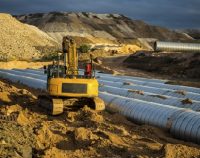
Conduits, Culverts, and Pipes Part I: 4 PDH
$24.00 Add to cartPart I of a two-part series. This course provides guidance on the design and construction of conduits, culverts, and pipes, and the design procedures for trench/embankment earth loadings, highway loadings, railroad loadings, surface concentrated loadings, internal/external fluid pressures, cast-in-place conduits for dams, circular reinforced concrete pipe for small dams and levees, and corrugated metal pipe for rural levees and culverts.Instructor: Raymond Bosek, PEPart I of a two-part series. This course provides guidance on the design and construction of conduits, culverts, and pipes, and the design procedures for trench/embankment earth loadings, highway loadings, railroad loadings, surface concentrated loadings, internal/external fluid pressures, cast-in-place conduits for dams, circular reinforced concrete pipe for small dams and levees, and corrugated metal pipe for rural levees and culverts.
SPECIFIC KNOWLEDGE OR SKILL OBTAINED
This course teaches the following specific knowledge and skills:
- Material selection
- Installation methods
- Loadings
- Method of analysis
- Joints & camber
- Life cycle design
CERTIFICATE OF COMPLETION
You will be able to immediately print a certificate of completion after passing a 20 question multiple-choice quiz. The quiz can be retaken unlimited times until a passing grade of 70% or better is earned. This course satisfies 4 professional development hours (PDH) of continuing education.
Preview CourseClick “Preview Course” to View Prior to PurchaseClick “Add to Cart” to Purchase and Access QuizConduits, Culverts, and Pipes Part I: 4 PDH
$24.00 Add to cartPart I of a two-part series. This course provides guidance on the design and construction of conduits, culverts, and pipes, and the design procedures for trench/embankment earth loadings, highway loadings, railroad loadings, surface concentrated loadings, internal/external fluid pressures, cast-in-place conduits for dams, circular reinforced concrete pipe for small dams and levees, and corrugated metal pipe for rural levees and culverts.Instructor: Raymond Bosek, PEPart I of a two-part series. This course provides guidance on the design and construction of conduits, culverts, and pipes, and the design procedures for trench/embankment earth loadings, highway loadings, railroad loadings, surface concentrated loadings, internal/external fluid pressures, cast-in-place conduits for dams, circular reinforced concrete pipe for small dams and levees, and corrugated metal pipe for rural levees and culverts.
SPECIFIC KNOWLEDGE OR SKILL OBTAINED
This course teaches the following specific knowledge and skills:
- Material selection
- Installation methods
- Loadings
- Method of analysis
- Joints & camber
- Life cycle design
CERTIFICATE OF COMPLETION
You will be able to immediately print a certificate of completion after passing a 20 question multiple-choice quiz. The quiz can be retaken unlimited times until a passing grade of 70% or better is earned. This course satisfies 4 professional development hours (PDH) of continuing education.
Preview CourseClick “Preview Course” to View Prior to PurchaseClick “Add to Cart” to Purchase and Access Quiz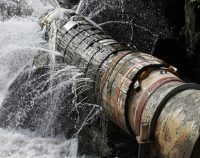
Conduits, Culverts, and Pipes Part II: 4 PDH
$24.00 Add to cartPart II of a two-part series. This course provides guidance on the design and construction of conduits, culverts, and pipes, and the design procedures for trench/embankment earth loadings, highway loadings, railroad loadings, surface concentrated loadings, internal/external fluid pressures, cast-in-place conduits for dams, circular reinforced concrete pipe for small dams and levees, and corrugated metal pipe for rural levees and culverts.Instructor: Raymond Bosek, PEPart II of a two-part series. This course provides guidance on the design and construction of conduits, culverts, and pipes, and the design procedures for trench/embankment earth loadings, highway loadings, railroad loadings, surface concentrated loadings, internal/external fluid pressures, cast-in-place conduits for dams, circular reinforced concrete pipe for small dams and levees, and corrugated metal pipe for rural levees and culverts.
SPECIFIC KNOWLEDGE OR SKILL OBTAINED
This course teaches the following specific knowledge and skills:
- Material selection
- Installation methods
- Loadings
- Method of analysis
- Joints & camber
- Life cycle design
CERTIFICATE OF COMPLETION
You will be able to immediately print a certificate of completion after passing a 20 question multiple-choice quiz. The quiz can be retaken unlimited times until a passing grade of 70% or better is earned. This course satisfies 4 professional development hours (PDH) of continuing education.
Preview CourseClick “Preview Course” to View Prior to PurchaseClick “Add to Cart” to Purchase and Access QuizConduits, Culverts, and Pipes Part II: 4 PDH
$24.00 Add to cartPart II of a two-part series. This course provides guidance on the design and construction of conduits, culverts, and pipes, and the design procedures for trench/embankment earth loadings, highway loadings, railroad loadings, surface concentrated loadings, internal/external fluid pressures, cast-in-place conduits for dams, circular reinforced concrete pipe for small dams and levees, and corrugated metal pipe for rural levees and culverts.Instructor: Raymond Bosek, PEPart II of a two-part series. This course provides guidance on the design and construction of conduits, culverts, and pipes, and the design procedures for trench/embankment earth loadings, highway loadings, railroad loadings, surface concentrated loadings, internal/external fluid pressures, cast-in-place conduits for dams, circular reinforced concrete pipe for small dams and levees, and corrugated metal pipe for rural levees and culverts.
SPECIFIC KNOWLEDGE OR SKILL OBTAINED
This course teaches the following specific knowledge and skills:
- Material selection
- Installation methods
- Loadings
- Method of analysis
- Joints & camber
- Life cycle design
CERTIFICATE OF COMPLETION
You will be able to immediately print a certificate of completion after passing a 20 question multiple-choice quiz. The quiz can be retaken unlimited times until a passing grade of 70% or better is earned. This course satisfies 4 professional development hours (PDH) of continuing education.
Preview CourseClick “Preview Course” to View Prior to PurchaseClick “Add to Cart” to Purchase and Access Quiz
Shopping Cart