

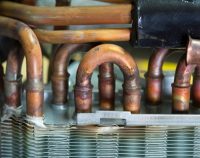
Heat Transfer: 4 PDH
$24.00
The transfer of heat is an integral part of many industrial processes. Moreover, heat transfer affects our everyday lives – from an oven heating our dinner to the wind cooling us on a hot summer day. Thus, it is important that the engineer understands how to apply the basic principles of heat transfer to solve real-world problems.
SPECIFIC KNOWLEDGE OR SKILL OBTAINED
This course teaches the following specific knowledge and skills:
- Heat transfer definitions and terminology, including heat flux, thermal conductivity, LMTD, and heat transfer coefficients
- Conduction and the equivalent resistance formulas
- Convection and use of the overall heat transfer coefficient
- Radiant heat transfer, including black bodies, gray bodies and emissivity
CERTIFICATE OF COMPLETION
You will be able to immediately print a certificate of completion after passing a 15 question multiple-choice quiz. The quiz can be retaken unlimited times until a passing grade of 70% or better is earned. This course satisfies 4 professional development hours (PDH) of continuing education.
Related Courses
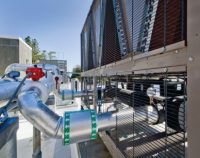
Water Cooled Air Conditioning Systems Part 1: 2 PDH
$12.00 Add to cartIn this course the student will understand the requirements and best practices for the design, installation and commissioning of cooling tower systems of water cooled air conditioning systems.Instructor: Seth Grablow, PESPECIFIC KNOWLEDGE OR SKILL OBTAINED
This course teaches the following specific knowledge and skills:
- Cooling Tower Types and Systems
- Construction and Installation Requirements
- Installation Locations
- Water and Bleed-Off Water Water Control
- Notices and Labels
- Risk Management
- Testing and Commissioning
CERTIFICATE OF COMPLETION
You will be able to immediately print a certificate of completion after passing a 15 question multiple-choice quiz. The quiz can be retaken unlimited times until a passing grade of 70% or better is earned. This course satisfies two (2) professional development hours (PDH) of continuing education.
Preview CourseClick “Preview Course” to View Prior to PurchaseClick “Add to Cart” to Purchase and Access Quiz
Carbon Absorption of Volatile Organic Compounds: 3 PDH
$18.00 Add to cartCarbon adsorption is used in air pollution control to remove volatile organic compounds (VOCs) from low to medium concentration gas streams, when stringent outlet concentration must be met and/or recovery of the VOC is desired. This course covers the types of adsorbers, adsorption theory, and design procedures for carbon adsorption equipment.Instructor: Seth Grablow, PECarbon adsorption is used in air pollution control to remove volatile organic compounds (VOCs) from low to medium concentration gas streams, when stringent outlet concentration must be met and/or recovery of the VOC is desired. This course covers the types of adsorbers, adsorption theory, and design procedures for carbon adsorption equipment.
SPECIFIC KNOWLEDGE OR SKILL OBTAINED
This course teaches the following specific knowledge and skills:
- The types of carbon adsorption equipment and which are in most common use
- Define an adsorption isotherm and be able to recognize the equation for the Freundlich isotherm
- Adsorber sizing parameters
- Make adsorption and desorption time calculations
- Procedures for estimating carbon requirements
- Cost estimation procedures for carbon adsorption systems
CERTIFICATE OF COMPLETION
You will be able to immediately print a certificate of completion after passing a 20 question multiple-choice quiz. The quiz can be retaken unlimited times until a passing grade of 70% or better is earned. This course satisfies 3 professional development hours (PDH) of continuing education.
Preview CourseClick “Preview Course” to View Prior to PurchaseClick “Add to Cart” to Purchase and Access Quiz
